Thursday, March 29, 2012

APP的未来:很美


Sent to you by Aaven via Google Reader:


via 36氪 by JohnTian on 3/28/12

Andreessen曾说软件正在吞噬着世界,现在看来APP正吞噬着软件。随着移动设备的快速崛起,随之伴随而来的是APP呈现爆发式增长。近日,移动数据分析公司Flurry给出了一份APP发展趋势报告,显示移动APP正对很多行业产生变革,中国成为APP增长最快的国家之一。

  • APP正对游戏、艺术品、零售、新闻媒介、旅游等行业产生深刻变革

  • 2011年以来,人们花费在APP上的时间已经超过网页,而且势头不减

  • 不仅是网页,电视似乎也受到很大影响

  • 人们花费在移动APP上时间分配,游戏与社交占据了快80%

  • 各领域APP的忠诚度分布,暗示着这些领域可能就是未来

  • 2011年,世界范围内APP生态系统的收入情况分布

  • APP趋势是一个全球现象,中国不容忽视

  • APP的未来增长趋势,中国最具潜力

  • 未来趋势,还看东方。新设备的激活量,中国已经超过美国

  • 移动广告的增长机会正快速崛起

  • 广告,关键还得找到正确的受众

  • 社交对流量的影响显著

除非注明,本站文章均为原创或编译,转载请注明: 文章来自36氪


Things you can do from here:


Monday, March 26, 2012

創業者的成份分析


Sent to you by Aaven via Google Reader:


via MR JAMIE by Jamie on 3/25/12

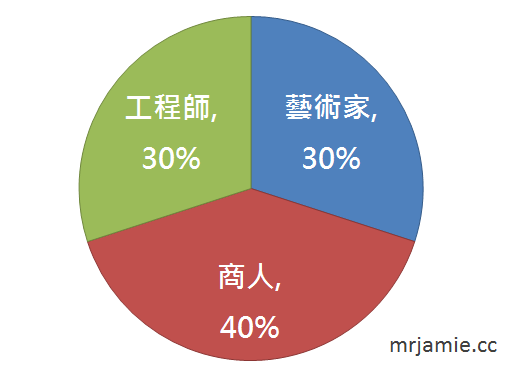
我常常在想,如果你把一個「成功」的創業者丟到 @deduce成份分析器裡面,會跑出什麼東西來。上面這個圖,大概是我想像中最可能出現的結果。

一個成功的創業者,勢必需要是一個商人。而且他的商人 DNA,可能需要大過所有其他成份。創業畢竟是做生意,如果公司沒辦法有營收、獲利、最後規模化,那這門生意終究必須關門大吉。所以一個成功創業者的商人 DNA,必須要有相對的優勢。

但從另一方面來說,他的商人 DNA 卻不能有絕對的優勢。創業,尤其是網路創業,畢竟是在找那個尚未存在的商業模式,如果你太執著於眼前的利益,那從定義上來說,就不可能找到任何未知的東西。所以我把商人放在 40%,但除了商人,我認為一個創業者還必須要有 60% 其他的特質。

首先是工程師的特質。Engineers 是很理性的動物,我們的專長是發掘問題,解決問題。工程師尤其是容易溝通的,只要是情符合邏輯與科學的原理,通常就能夠說服我們。但工程師的缺點,就是想法太一致。如果把一樣的問題、一樣的客觀條件丟給一群工程師,你大概很難得到不一樣的答案。所以工程師的執行力是創業者必備的,但只有商人和工程師加起來卻也還是不夠。

你必須還要有藝術家的 DNA。相對於工程師的理性,藝術家擁有的是感性。相對於工程師的按部就班,藝術家往往是偏執、理想、充滿熱情的。他能夠在所有 (已知) 條件都不利於他時堅持下去,也有勇氣去站著與全世界作對。而就像無數個成功故事中提到的一樣,這似乎是每個創業者必須經歷的道路,必須具備的能力。

我不確定工程師與藝術家該如何分配剩下的 60%,但我知道哪一個太多都不是很好,而且它們都不能超過商人的 40%,所以唯一合理的分配,就是 30% & 30%。因此,我產生出了理想中的創業者成份組成。

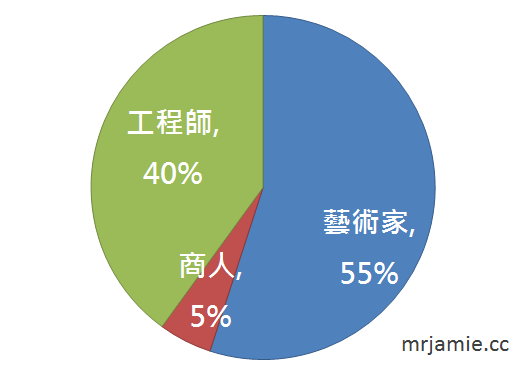
不過那只是最終的結果,達到奈許平衡時的分布狀態,但如果你對初創業者進行成份分析,大概會是這樣的結果。

他們的藝術家成份往往佔絕大多數,畢竟用工程師的角度去思考,出來創業不一定是解決問題最佳的方法。而用商人的價值觀去判斷,創業的獲利期望值更是遠遠低過去 Google 上班。但他們還是出來創業了,所以背後肯定有很大藝術家偏執、忠於自我的 DNA 在驅動。

但創業畢竟是在經營市場,所以從那邊,他們必須要慢慢學會如何當一個商人,同時不要失掉工程師的善與藝術家的美。這個成份轉換當然不是一瞬間的,像好酒一樣,它往往需要 2-3 年,甚至是 5-10 年的醞釀,過程中還需要很多的失敗、挫折來當酵素。

從這個角度去看,創業之路更是一個必須,也絕對是急不得的過程。幫助創業者越久,越發現重點不是「加速」,不是在多少個月內做出成績,重點更是陪著他們蛻變,和他們一起堅持到成功的那一刻,無論那需要多久。

第五屆 appWorks 育成計畫已經開始申請

相關文章


Things you can do from here:


Thursday, March 22, 2012

中国引领全球移动应用市场增长,未来iOS和Android应用市场潜力巨大


Sent to you by Aaven via Google Reader:


via 36氪 by leo on 3/21/12

移动数据分析公司Flurry最近发布了多份针对中国移动应用市场的研究报告。从中可以看出中国市场在新iOS和Android设备激活数量上已远超其他国家,移动应用的增长速度也是全球最快。2011年初,中国app sessions(应用会话)排名全球第10。到去年年底,这一排名已经上升到第2位,仅次于美国。

下面是Flurry公司统计的2012年第一季度全球应用app sessions增长排名。(一次app sessions指一个应用的发布或被用户使用了一次,比如你打开一个新应用使用了几分钟即可算一次应用会话。)

下图是中国、英国、澳大利亚和日本在2011年1月到10月的应用会话市场份额趋势图。中国从最初的1.8%上升到十个月之后7.3%,目前已成为全球第二大应用经济体,未来恐怕很快将超过占据市场份额47%的美国。

下图是中国(红)和美国(蓝)每月新激活的iOS和Android设备数量趋势图,从2011年一月份一直到2012年三月份,中国一直处在增长之中。

下面是全球app sessions分布情况,美国仍然占据全球最大的应用会话份额,但尽管数量仍在不断增长,其整体份额却呈下降趋势。其中Top 10中的其他9个国家(中英韩法澳加日德西)的份额从27%增长到30%,而其他国家也从17%增长到24%。

下图是Flurry在2011年底统计的全球各国iOS和Android应用使用次数的统计排名。Flurry共统计了全球14万个应用,并根据30天内的应用使用次数作出的排名。美国共有1.09亿次使用,占全球应用使用总数的41%。中国为3500万次,占13%。

下图是Flurry通过复杂的统计方式对各个国家未使用iOS和Android用户(中产阶级、成人、15到64岁)的统计(详情请点击英文原文)。其中中国还有1,2亿未使用iOS和Android设备,但有能力使用的潜在消费者。也就是说,未来中国市场的潜力仍是最大的,这部分人的转化成本也是最低的。

最后一张图,是Flurry公司统计的各国2011年10月份新应用下载比例图,其中中国占到12%。但要注意的是,在去年1月份,这一比例还只有1.2%。

除非注明,本站文章均为原创或编译,转载请注明: 文章来自36氪


Things you can do from here:


Pinterest的对手Fancy再现神奇之举,一名用户凭借其设计的小物件获得25万美元的投资

各种网购新idea
这个是界面累的(Fab也算是一个)
还有这种link类的https://gumroad.com/


Sent to you by Aaven via Google Reader:


via 36氪 by iWeb on 3/22/12

Pinterest的光芒过于耀眼,使得外界很少将注意力投向它的竞争对手。Fancy似乎是个例外,它往往在Pinterest采取新动作之际给大家带来惊喜。不久前,正当外界关注Pinterest的爆炸式增长时,Fancy抢先Pinterest一步,推出了站内直接购买图中的商品的功能。最近,Pinterest正着手进行首次重大改版,Fancy这边则传来消息——一名用户凭借其设计的磁性电灯开关罩获得了一笔25万美元的天使投资。

设计上图这个小物件的用户是Jake Frey,是工业设计专业的一名学生。Frey将设计成品的图片上传Fancy后,仅在数天内就收到了数百份订单。在一周内,一位天使投资人联系了Frey,提供一笔25万美元的投资,希望他能把这个小物件投入大量生产。

让用户通过图片类服务获得一笔投资,听起来确实是一件很神奇的事,但Fancy做到了。仔细分析这个案例,可以发现Fancy与其他类Pinterest服务的与众不同之处。首先,Fancy的用户参与程度高得惊人。尽管用户数远不如Pinterest,Fancy的25万用户却发布了1760万篇图片内容。相比之下,Pinterest的1100万用户发布的图片内容也不过是3200万篇。当数字具体到单个用户上时,用户参与程度的差距就更加明显。平均每个Fancy用户的发布数66篇,而每个Pinterest用户的发布数只有可怜的3篇。极高的用户参与程度再加上站内直接购买的功能,一件小物品在短时间内取得大量订单也就变得顺利成章了。谈及这件事时,Frey本人分析道,"像Pinterest和Tumblr这样的网站,内容可以很容易获得大量关注,却实际上带来不了什么。使用Fancy,则能做到让一张图片变成一桩货真价实的生意"。

其次,Fancy并没有把自己简单定位为图片类服务,而是快速地向电子商务平台转型。除了推出站内直接购买功能,Fancy还与商家展开了多方面的合作,比如喜欢某一张商品图片就能获得相应的折扣。Fancy表示,旗下用户通过这种方式已经解锁获得了25万次的品牌折扣优惠。此外,Fancy还推出了逆向团购功能。

Pinterest模式进入中国后,很快便产生了与电子商务结合的讨论,而Pinterest的对手Fancy已经在把讨论的内容变为现实。从某种意义上来说,Fancy的做法更值得其他类Pinterest服务借鉴。


除非注明,本站文章均为原创或编译,转载请注明: 文章来自36氪


Things you can do from here:


Tuesday, March 13, 2012

zz: How Glancee And Highlight Are Fixing Those Background Location And Notifs


Sent to you by Aaven via Google Reader:


via TechCrunch by Eric Eldon on 3/13/12

90c31a8e6d2111e18bb812313804a181_7

Somewhere off in the future, there will be a mobile app that shows you all of the nearby people who you might find interesting — without you having to click a single button to check in. But we're not there yet, as thousands of South By Southwest attendees have been discovering over the last few days.

New background location apps like Highlight and Glancee have certainly been trying hard. As everyone else has partied, the tiny teams at these startups (and their various rivals) have been working around the clock to tweak the notifications they send and the nearby people they show.

Have they been successful?

The proximity of massive numbers of other users have pushed what these apps do to the breaking point, and I've been hearing lots of criticism about their inability to stop the notification spam, or deliver the right results.

The complaints are anecdotal so far. Background apps aren't for everyone, whether because people don't want to share their locations, because they want to conserve their batteries, or because they simply don't care about finding nearby friends or interesting strangers.

But there's evidence that both apps have been getting decent traction. Highlight has broken into the top 25 social networking app category in Apple's US iTunes store. While it's not available for Android, rival Glancee is — and has been racking up some strong numbers lately on Google Play. The power of marketing..

So what have these apps been doing to fix themselves up for the crowds? I've been talking to the chief executives/cofounders/engineers of Glancee and Highlight for a few more details.

The changes aren't going to leave every user satisfied, but the results could be a much more nuanced discovery experience when you use them in everyday life.

Andrea Vaccari of Glancee tells me that his apps' notifications are currently based on three things. The first is relevancy of someone based on friends and interests, with friends weighted more. The second is the recency of any previous recommendation. And from that, the third is the recommendation for that particular person. It also fine-tunes the experience for each user, so these are not hard and fast rules.

"What we explore," he explains, "is how to best compute relevancy (friends over interests, rare interests over popular ones), how often to send out recommendations with respect to your movement habits (more recommendations if you are moving, less recommendations if you are in the same place for a long time or if it's late at night), and to distinguish between your roommates and coworkers (people you already know are nearby) and everyone else."

It also looks at how often you, the user, are moving around. If you stay in the same place, it'll slow down the frequency of notifications; if you regularly get stationary at certain times, like at 9am when you get to work, it'll also take that into account.

Highlight has a somewhat different approach, although the themes are broadly similar. It's currently providing push notifications about people in the following order of importance: friend connections, things in common, time of day, location (ten feet versus 200 feet), and whether you've crossed paths before with the other person.

Back in San Francisco, you might see people show up who only had a friend or two in common, or even no friends and just a couple interests. But here, as chief executive Paul Davison told me yesterday on TCTV, you'll need to have high numbers of friends and interests connecting you (think: dozens) in order to register.

The startup also made a subtle but significant design change partway through the event. It switched to only showing you the top ten most relevant people who were nearby. While this has created an asymmetrical view, in that you might not see the other person even if they see you, it also allowed each user to get a more customized view.

Overall, Highlight notifications have felt way more minimal than the others — some that I've tried have had like 50 a day. Davison confirmed this yesterday, saying that users should be getting them in the single digits. However, he noted, if you're using the messaging feature or getting marked as a Highlight (a new feature to identify people you find particularly interesting), you'll see those as well. In its next version, look for the app to add a feature where each user can manually control frequency for each type of notification.

So, as SXSW attendees head back to the real world, these app developers will be figuring out how to balance day-to-day activity with the changes they've had to make for the event. After all, lots of users will be going to other conferences and concerts around the country and the world — and they'll be wanting to use these apps to make the same sorts of connections in the middle of crowds, too.

My sense is that these apps are in the middle of a new way of sharing, that will be adopted by larger companies (Facebook and Foursquare?). The white-hot pace of experimentation this weekend might one day be viewed as a watershed moment of widespread location sharing, not just a crowded, noisy and battery-draining affair.

[Top image via Erick Schonfeld.]


Thursday, March 8, 2012

zz: 亚马逊专利电子书注释

这都专利了亲!


Sent to you by Aaven via Google Reader:


via 橙味网 by orange on 3/8/12

本周二,美国专利商标局(USPTO)授予了亚马逊一项专利:为数字作品提供注释的方法和系统。专利描述了接受和传播数字作品注释的方法和系统,注释包括文本、图形或与数字作品内容相关。专利是在 2005 年申请的,KDE 桌面的 Okular 有类似的功能,它在 2006 年发布了最早的版本,看起来开源软件又一次"侵犯了专利"。

http://news.cnblogs.com/n/134339/


Things you can do from here:


zz: Eric Schmidt-Backed Slice: Receipt Aggregator And Tracking Service

无限商机


Sent to you by Aaven via Google Reader:


via TechCrunch by Leena Rao on 3/8/12

slice

Eric Schmidt-backed receipt tracking service Slice is bringing its handy, organizational platform to Android devices.

Slice offers Yahoo Mail, Gmail and iPhone apps that help you organize your online shopping by analyzing your inbox. It's sort of like what TripIt does for your itineraries, except Slice tracks receipts, notices and purchases.

Once you sign up, the app automatically aggregates and pulls information from the electronic receipts in your email and organizes it in one place. The startup says that receipts and purchases often gets lost in your inbox and the app consolidates your shopping history in one place so you don't have to log into multiple websites, dig through receipts or manually file emails. Slice for the iPhone gives you access to all this information on the go.

With the launch of the Android app, users will also be able to view and organize purchases made using Google Wallet. The app will track all your in-progress shipments on a single map as they make their way to your front door, with detailed information about the contents of the package and where it is coming from. Push notifications let you know when a purchase has shipped and when it gets delivered.

Slice will also give you historical purchase details beyond what's provided in your credit card statement, showing you exactly what you bought down to the individual item, not just where you bought it.

Since launching in May of 2010, Slice has processed more than 10 million purchases. Slice faces competition from Lemon.


Things you can do from here: